
What Is Burlesque?
What is a burlesque show? A burlesque show is a live theatrical performance built around character, humor, dance, striptease, costume, music, and audience connection. Depending on the production, it may feel glamorous, comic, sensual, strange, satirical, cinematic, or experimental.
Some shows are glamorous and classic. Others are comic, strange, political, sensual, experimental, or deliberately absurd.
Burlesque is not defined by one costume, one body type, one movement style, or even one amount of clothing removed.
At its heart, burlesque is an art of directing attention.

A performer decides what the audience sees, when they see it, what they anticipate, and when that expectation gets rewarded, transformed, delayed, or disrupted.
After years of performing, producing, directing, and teaching burlesque in Chicago, that is the definition I keep returning to.
This guide explains what burlesque means, what happens at a burlesque show, what a burlesque performer does, where the form came from, how burlesque differs from cabaret and stripping, what burlesque classes are like, and how someone can begin exploring the art form.
Curious what burlesque feels like from the inside?
If you are in Chicago, start with the beginner-friendly $40 Sunday burlesque class in Chicago. No dance experience is required, and can roll into the four-session Foundations path if you want to continue. For online learning, use the broader burlesque classes hub.
Want to experience burlesque instead of only reading about it?
Try the room: Start with the beginner-friendly $40 Sunday class. Want individual attention: private lessons are available for confidence, movement, stage presence, specific skills or a more personal starting point.
What Happens at a Burlesque Show?
A burlesque show is usually made up of a series of short live performances.
Rather than following one continuous story, a show may move from performer to performer, with each act creating its own character, mood, joke, transformation, or miniature world.
A modern burlesque show may include:
- Classic showgirl performance
- Striptease
- Comedy
- Character work
- Drag
- Live singing
- Fan dancing
- Chair dance
- Circus or aerial performance
- Elaborate costumes
- Political or cultural satire
- Magic
- Audience interaction
- Group choreography
- Immersive storytelling
Many productions also include a host or emcee who introduces the performers, talks with the audience, and gives the evening a sense of rhythm.
Some shows feel like playful nightclub revues.
Others feel much closer to cabaret, theater, concert performance, or cinematic storytelling.
And some are built as complete theatrical worlds with recurring characters, scenes, music, and connected stories.
That range is part of what makes burlesque interesting.
A burlesque performer is not simply moving through choreography.

She is constructing a moment.
A glove might take thirty seconds to remove because the anticipation is the point. A costume piece might reveal an entirely different character beneath it. A familiar song might become glamorous, ridiculous, frightening, romantic, political, or unexpectedly tender.
The performer controls what the audience sees, when it sees it, and what the moment means.
That control of attention is one of the defining skills of burlesque.
What Should You Expect at a Burlesque Show?
Every production is different, but there are a few things first-time audience members can generally expect.
A variety of short acts
Many burlesque shows feature multiple performers, each presenting an act that lasts only a few minutes.
One act may be glamorous and slow.
The next may involve comedy, drag, circus, live vocals, or something wonderfully strange.
Audience response is part of the room
Burlesque audiences often applaud, laugh, cheer, or respond vocally during a performance.
That energy can become part of the act itself.
Burlesque is unusually aware of the relationship between performer and audience.
The amount of nudity varies
Some performers remove substantial portions of a costume.
Others remove only a glove, jacket, skirt, stocking, hat, boa, or other outer layer.
Some remain fully clothed.
The reveal is a theatrical tool, not a required quantity of nudity.
You usually do not need to dress up
Some guests love arriving in vintage, cocktail, glamorous, or theatrical clothing because it adds to the evening.
Others attend in ordinary clothes.
Unless the event specifically has a dress code or theme, you generally do not need to arrive in costume.
Photography rules vary
Many shows prohibit flash photography, recording, or photography during performances.
Others allow photographs only during designated moments.
Always check the production or venue rules before recording a performer.
Most public burlesque shows are for adults
Age restrictions vary by venue and production. Many public shows are 18+ or 21+, particularly when alcohol is served.
Always check the specific listing before attending.

What Is Burlesque?
Burlesque is a form of theatrical entertainment that can combine dance, comedy, satire, character, music, costume, storytelling, and striptease.
The word historically referred to exaggeration, parody, and humorous imitation.
Modern burlesque often includes the art of the reveal, but it is not defined only by removing clothing.
A burlesque act might:
- Tell a story
- Transform a character
- Parody a familiar idea
- Celebrate glamour
- Explore identity
- Make an audience laugh
- Create suspense
- Play with desire
- Build an elaborate visual world
- Turn an ordinary object into something theatrical
Burlesque can appear in theaters, cabarets, nightclubs, festivals, private events, immersive productions, student showcases, and large-scale variety shows.
The central idea is not simply what the performer reveals.
It is how the performer controls the reveal, guides attention, and creates a relationship with the audience.

What Makes a Performance Burlesque?
There is no single movement, costume, prop, or degree of nudity that automatically makes something burlesque.
Instead, burlesque commonly draws from elements such as:
- Tease and reveal
- Character
- Exaggeration
- Humor
- Satire
- Costuming
- Musicality
- Transformation
- Audience interaction
- A strong point of view
- Theatrical presentation
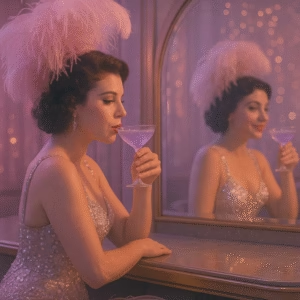
One performer may appear in rhinestones, gloves, and feathers.
Another might appear as a monster, clown, historical figure, household object, strange creature, or surreal invention.
The costume does not determine whether the work is burlesque.
The performance choices do.
Is Burlesque Always Sexual?
Burlesque can be sensual, but it does not have to be.
The art form frequently explores anticipation, desire, costume, gaze, and reveal, so sexuality is often part of its language.
But sensuality is only one possibility.
An act may be:
- Hilarious
- Elegant
- Grotesque
- Political
- Emotionally vulnerable
- Athletic
- Deeply theatrical
- Intentionally ridiculous
- Visually spectacular
- Almost completely nonsexual
The performer determines the tone.
A reveal can be playful, defiant, glamorous, sad, absurd, serious, romantic, comic, or surprising.
Burlesque also gives a performer unusual control over how the body is framed and what the audience is invited to notice.
That agency is one reason many artists find the form creatively powerful.

Is Burlesque the Same as Striptease?
Burlesque and stripping overlap, but they are not interchangeable terms.
Both may involve sensual performance, costume removal, dance, audience attention, and erotic expression.
Burlesque commonly emphasizes a constructed act with a particular song, character, concept, joke, story, costume, or theatrical arc.
Striptease may be one tool inside that act.
The performance itself might be built around transformation, parody, spectacle, character, suspense, or narrative.
Stripping is also a broad professional field with its own skills, traditions, venues, customs, and performance language.
The distinction is not that one form is artistic and the other is not.
The differences usually involve:
- Context
- Structure
- Venue
- Performer intention
- Audience relationship
- How the performance is produced and presented
There is significant historical and practical overlap between the forms.
Neither needs to be diminished in order to describe the other accurately.

What Is the Difference Between Burlesque and Cabaret?
Cabaret is a broad format for intimate live entertainment.
A cabaret show might include:
- Singing
- Comedy
- Dance
- Monologues
- Drag
- Burlesque
- Circus
- Magic
- Variety acts
Burlesque is a more specific theatrical tradition associated with parody, tease, reveal, exaggeration, character, and the performer’s control of audience attention.
A burlesque act can appear inside a cabaret show.
A cabaret production may contain no burlesque at all.
In simple terms:
Cabaret describes a broad performance format. Burlesque describes a particular theatrical tradition and performance language.
What Is the Difference Between Burlesque and Vaudeville?
Vaudeville was a popular form of variety entertainment in the United States and Canada, especially from the late nineteenth through the early twentieth century.
A vaudeville bill might include:
- Singers
- Comedians
- Dancers
- Magicians
- Acrobats
- Musicians
- Dramatic scenes
- Novelty performers
- Specialty acts
Burlesque developed alongside and sometimes overlapped with vaudeville, but burlesque maintained a stronger relationship to parody, satire, chorus performance, glamour, and eventually striptease.
Modern variety productions often mix these traditions freely.
Burlesque might appear beside music, comedy, magic, circus, dance, and theatrical characters.
That lineage is also where Vaudezilla gets its name: many forms of live entertainment working together to create a complete experience.
For larger private, corporate, and multi-performer entertainment, explore Vaudezilla Entertainment.

A Brief History of Burlesque
The history of burlesque is much broader than modern striptease.
The term originally referred to comic exaggeration, parody, and theatrical imitation.
In nineteenth-century Britain and the United States, burlesque productions often reworked serious plays, operas, mythology, and social conventions through humor, spectacle, music, and gender play.
American burlesque later developed alongside variety theater and vaudeville.
Over time, chorus lines, comedy, glamour, and striptease became increasingly central.
Performers such as Gypsy Rose Lee helped establish the image of the witty, self-aware burlesque star who understood that the tease could be just as important as the reveal.
By the middle of the twentieth century, changing entertainment laws, film, television, and shifting social tastes contributed to the decline of traditional burlesque circuits.
The modern revival, often called neo-burlesque, brought the form back through independent theater, nightlife, festivals, queer performance, cabaret, circus, drag, comedy, and experimental performance.
This page is a beginner orientation rather than a complete history.
For the longer story, read The History of Burlesque: From Vaudeville to Modern Performance.
What Is Neo-Burlesque?
Neo-burlesque is the modern revival and reinvention of burlesque.
It draws from classic striptease, vintage glamour, cabaret, drag, punk, circus, theater, comedy, dance, and contemporary performance art.
Some neo-burlesque performers recreate historical aesthetics.
Others reject them completely.
Modern performers frequently create their own:
- Concepts
- Costumes
- Choreography
- Characters
- Music edits
- Props
- Production worlds
- Performance personas
Neo-burlesque can be glamorous, funny, queer, political, theatrical, dark, absurd, minimalist, strange, or spectacular.
There is no single approved burlesque body, gender, age, aesthetic, or performance style.

Where Can You See Burlesque in Chicago?
Chicago has a long relationship with burlesque, cabaret, nightlife, theater, drag, circus, comedy, and variety entertainment.
The current scene includes traditional revues, experimental work, immersive productions, cabaret, nightclub shows, student performances, and independent productions.
If you are looking for an actual performance rather than a definition of the form, start with my guide to Chicago burlesque shows.
You can also explore more of the history behind my own work in the city through Meet Red Hot Annie.
Burlesque made me a performer.
Producing made me a builder.
Over time, what I was really learning was how to direct attention, emotion, characters, rooms, audiences, participation, and memory.
That work now stretches from burlesque into teaching, live entertainment, immersive experiences, performance direction, and creative direction.
What Happens in a Burlesque Class?
A burlesque class is not necessarily a rehearsal for public performance.
Many people take classes because they want to explore movement, musicality, creativity, sensuality, stage presence, or simply an unfamiliar way of inhabiting a room.
A beginner burlesque class might include:
- Walking with intention
- Posture and alignment
- Hip, shoulder, and chest isolations
- Musical timing
- Glove or stocking removal
- Working with boas, chairs, fans, or props
- Character exercises
- Eye contact
- Audience awareness
- Short choreography
- Improvisation
- Stage presence
- Tease and reveal
- Clean poses and transitions
You should not need to remove clothing or reveal more than you choose.
A good beginner class gives students options, explains why an exercise exists, and allows movement to be adapted for different bodies, experience levels, and comfort levels.
Some students eventually decide to perform.
Others never want to appear onstage.
Both paths are perfectly legitimate ways to engage with the form.
If you want to try it without committing to performance, explore Chicago burlesque classes or view the current Chicago class schedule.
You can also learn how to spin burlesque tassels.

Do You Need a Certain Body Type to Do Burlesque?
No single body type defines burlesque.
The form depends on point of view, timing, performance choices, creativity, and the relationship an artist creates with the audience.
Different bodies move differently.
They reveal differently.
They wear costumes differently.
They create different images and tell different stories.
Good burlesque training should help a performer discover what works through their own body rather than treating one shape, age, gender presentation, or movement style as the standard.
A strong burlesque act is not created by matching one physical ideal.
It is created by making clear, intentional performance choices.
Do You Have to Take Your Clothes Off?
No.
Some acts include substantial costume removal.
Others remove only a glove, jacket, hat, boa, stocking, skirt, robe, or outer costume layer.
Some remain fully clothed.
The reveal is a theatrical tool, not a mandatory amount of nudity.
A more useful question than:
“How much do I have to take off?”
is:
“What changes when this costume piece is removed?”
What is discovered?
What transforms?
What does the audience understand differently after the reveal?
In burlesque, a reveal can be physical, emotional, visual, comic, or narrative.

How to Begin Learning Burlesque
You do not need to decide immediately whether you want to become a performer.
Start by experiencing the art form.
Attend a Show
Watch different styles and notice which performers, tones, costumes, characters, and production formats interest you.
Pay attention to more than choreography.
Notice how performers:
- Enter
- Use stillness
- Create anticipation
- Make eye contact
- Handle props
- Use musical pauses
- Recover when something unexpected happens
- End an act
Explore Chicago burlesque shows if you want a place to start.
Take a Beginner Class
A class can introduce movement vocabulary, musicality, tease, character, stage presence, and basic technique.
You do not need dance experience.
You also do not need a costume, stage name, or completed performance idea.
Explore beginner burlesque classes in Chicago.
Practice One Skill at a Time
Choose one area:
- Walking
- Gloves
- Musical pauses
- Eye line
- Posing
- Tassel twirling
- Character
- Chair work
- Clean beginnings and endings
Learning one skill clearly is more useful than trying to build an entire act before you understand its individual parts.
Learn the History
Burlesque has a complicated history involving parody, theater, vaudeville, striptease, labor, censorship, nightlife, gender, race, and changing cultural attitudes.
Understanding the artists and traditions that shaped the form gives your own participation greater context.
Read the deeper history of burlesque.
Decide Whether You Want to Perform
Enjoying burlesque and performing burlesque are separate paths.
You might love classes and never want to appear onstage.
You might create one act as a personal challenge.
You might eventually pursue professional performance.
You do not have to know at the beginning.
Curiosity is enough reason to start.
How to Become a Burlesque Performer
Becoming a burlesque performer involves considerably more than learning choreography.
A complete act requires:
- A clear concept or character
- Music that supports the idea
- Intentional movement
- Costume and reveal structure
- Stage presence
- Rehearsal
- Feedback
- Awareness of the audience and venue
- Reliable professional materials
Some performers begin through student showcases.
Others develop work independently or privately with a coach or director.
A working performer may eventually need:
- A stage name
- Performance photographs
- A complete act video
- A short biography
- Music files
- Costume-maintenance skills
- Professional communication
- An understanding of local booking expectations
There is no requirement to rush onto a stage.
A strong first act usually improves through rehearsal, observation, feedback, and revision.
If you are thinking seriously about performing, explore the burlesque performer pathway for act development, coaching, video, and booking preparation.
Common Misconceptions About Burlesque
“Burlesque is only vintage pinup dancing.”
Vintage glamour is one recognizable style.
Modern burlesque also includes contemporary, experimental, comedic, dramatic, political, queer, theatrical, surreal, and character-driven work.
“Every performer gets completely nude.”
Levels of reveal vary widely.
Some performers remove substantial portions of a costume.
Others remove only accessories or outer layers.
Some remain fully clothed.
“You need dance training.”
Dance experience can help, but it is not the only useful skill.
Character, musicality, timing, creativity, comedy, costuming, storytelling, and audience awareness can be equally important.
“Burlesque is only for one kind of body.”
Burlesque is practiced by performers across a wide range of bodies, ages, genders, aesthetics, identities, and abilities.
The performer’s choices matter more than fitting a single visual standard.
“Taking a burlesque class means you have to perform.”
Many students take classes for movement, creativity, confidence, community, or personal exploration and never perform publicly.
“Burlesque and stripping are enemies.”
They are not.
The forms have overlapping skills and histories.
They differ primarily through context, structure, intention, venue, and audience relationship.
Frequently Asked Questions About Burlesque
What does burlesque mean?
Burlesque historically refers to parody, comic exaggeration, and theatrical imitation.
Modern burlesque often combines those traditions with striptease, dance, costume, character, and storytelling.
What happens at a burlesque show?
A show may include several short acts, a host, comedy, dance, drag, music, circus, elaborate costumes, audience interaction, and costume reveals.
Some productions are variety revues.
Others tell a connected story or build an immersive theatrical world.
What should I wear to a burlesque show?
Unless the event has a stated dress code, wear whatever makes sense for the venue and the evening.
Some audiences enjoy cocktail, vintage, glamorous, or theatrical clothing.
Others arrive casually.
Is a burlesque show good for a date?
Many burlesque shows are popular for dates, anniversaries, birthdays, and celebrations.
Check the specific show’s age restrictions, tone, venue, and audience-participation policies before attending.
Is burlesque suitable for beginners?
Yes.
Beginner classes can introduce movement, musicality, tease, character, creativity, and stage presence without prior dance experience.
What should I wear to a burlesque class?
Wear clothing that allows you to move comfortably.
Depending on the class, you may eventually use heels, gloves, stockings, a robe, or props, but specialized costume pieces are generally unnecessary for a first class.
Do burlesque performers get completely nude?
Levels of nudity vary by venue, performer, law, and production.
Many public burlesque performances maintain some form of coverage.
Can men perform burlesque?
Yes.
Burlesque is performed by people of many genders.
The term “boylesque” is sometimes used, but many artists simply describe their work as burlesque.
Is burlesque empowering?
Some performers and students experience burlesque as empowering.
Others approach it primarily as theater, comedy, dance, nightlife, professional entertainment, or creative practice.
Empowerment is not a guaranteed outcome or the only valid reason to participate.
How old do you have to be to attend a burlesque show?
Age requirements depend on the venue and production.
Many public shows are 18+ or 21+, particularly when alcohol is served.
Do you need to be confident before taking a burlesque class?
No.
Confidence is not an admission requirement.
Many people take a class precisely because they want to practice being more expressive, playful, visible, creative, or physically present.
Explore Burlesque With Red Hot Annie
Burlesque is not one movement, costume, body, or performance style.
It is a living theatrical tradition that uses tease, transformation, character, humor, glamour, timing, and audience awareness to create something that can only fully exist in the moment of performance.
You can encounter it as an audience member.
You can explore it in a class.
You can study its history.
You can use it to develop stage presence.
You can create an act of your own.
Or you can simply become more curious about what happens when a performer learns how to direct a room.
There is no single correct entrance.
Want to Try Burlesque?
Explore movement, musicality, theatricality, classic technique, and stage presence in a welcoming beginner environment.
Explore Chicago Burlesque Classes →
Want to See Burlesque Live?
Explore Chicago performances, cabaret, immersive entertainment, and live shows.
Explore Chicago Burlesque Shows →
Thinking About Performing?
Learn how to move from curiosity to act development, professional video, coaching, and booking preparation.
Become a Burlesque Performer →
Curious About the Woman Behind the Work?
Burlesque made Annie a performer. Producing made her a builder. The work eventually expanded into directing performances, audiences, rooms, participation, and entire experiences.